
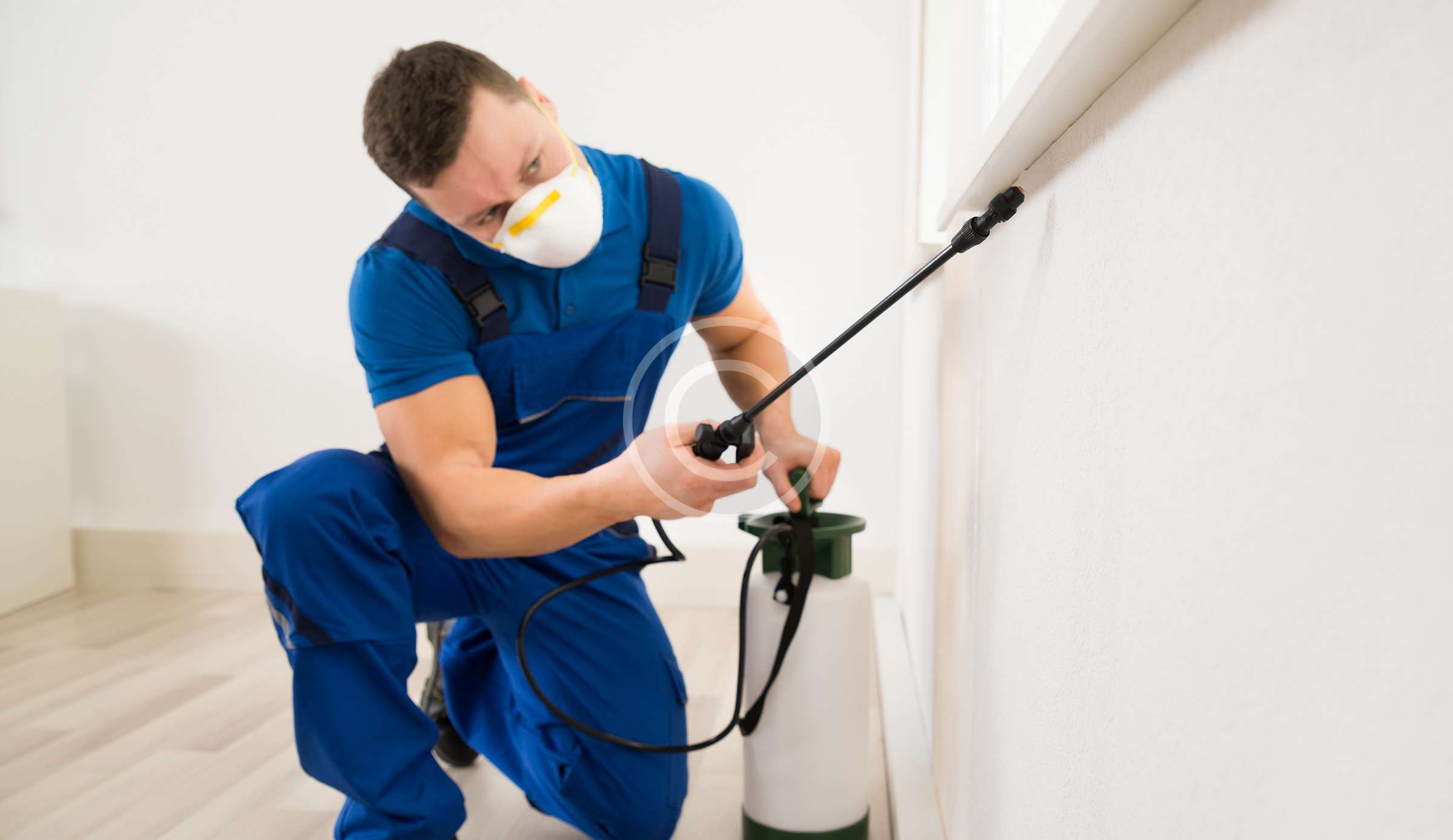
When people think about pests and health, they tend to think about bites and food poisoning. But for a lot of Australian families the bigger and far more persistent effect is allergic: cockroach and rodent allergens are well-documented triggers for asthma, and they are easy to live with for years without connecting the two.
If someone in your household has asthma that will not settle, or hay-fever symptoms that never seem to follow the seasons, it is worth looking at this.
How pest allergens actually work
The allergens are proteins, and they are not in the living insect so much as in what it leaves behind — droppings, shed skins, saliva, urine and body fragments. Those dry out, break down into fine particles, mix into household dust and become airborne when you walk across a carpet or the air conditioning kicks in.
That has two consequences worth understanding. First, you can be exposed without ever seeing the pest, which is common when the population is in a roof void or wall cavity. Second, killing the pests does not immediately fix the problem — the allergen reservoir remains in the dust until it is physically cleaned out.
Cockroaches
Cockroach allergen is among the best-evidenced indoor asthma triggers, with the strongest data in children. German cockroaches are the main concern because they live indoors permanently and in numbers, often concentrated in exactly the warm spots that then distribute the allergen — the fridge motor housing, the cavity behind the dishwasher, under the sink.
Practical steps: deal with the infestation properly rather than with surface sprays, then clean the harbourage areas themselves. Pull out the fridge and clean beneath and behind it, clear the kickboard cavities, and damp-wipe rather than dry-dust so you are removing particles rather than launching them into the air.
Rats and mice
Rodent urine and droppings work the same way. A roof-void rat population sits directly above your ceiling insulation, and the allergen makes its way down through downlights, ceiling vents and manholes.
One important safety point: never dry-sweep or vacuum rodent droppings. That aerosolises both allergen and any pathogens present. Dampen the material first, wear gloves and a fitted mask, bag it, and wash afterwards. Heavily contaminated insulation sometimes needs replacing rather than cleaning.
Dust mites
Not something a pest technician treats, but the largest indoor allergen source in most Australian homes, so it belongs in any honest list. Dust mites feed on shed skin and thrive in humidity above roughly fifty per cent. They concentrate in mattresses, pillows, bedding, upholstery and carpet.
What helps: washing bedding weekly in hot water, allergen-barrier covers on mattresses and pillows, keeping indoor humidity down through ventilation, and reducing soft furnishings in the bedroom of an allergic child. What does not help much is the general-purpose “anti-allergy” spray.
Bird mites and fleas
Two situations that produce sudden, baffling itching. If a bird nests in an eave or wall cavity and then the nest is abandoned, the mites left behind will move indoors looking for a host — the bites are intensely itchy and the cause is invisible unless you know to look for the nest. Fleas do something similar in a house that has been vacant: dormant pupae emerge together when people return and start moving around.
What to do about it
The order matters. Identify and eliminate the source, remove the allergen reservoir by cleaning thoroughly and damply, then control moisture and ventilation so conditions do not favour a return. Treating symptoms while the source remains is a treadmill.
If you suspect a pest population you cannot locate — activity in a roof space, an unexplained smell, itching with no visible cause — a professional inspection is the fastest way to settle the question. Request a quote or call 08 7095 6992.